
What's New
2026/3/4
Japan Contributes USD 6.7 Million to WFP to Support Rohingya Refugees and Host Communities in Cox’s Bazar
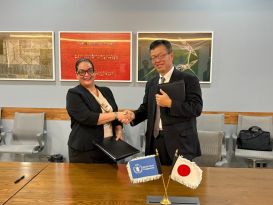
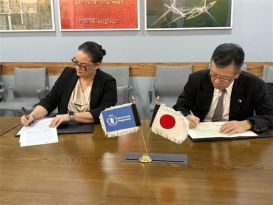
DHAKA – The United Nations World Food Programme (WFP) in Bangladesh welcomes a new contribution of USD 6.7 million (JPY 1.05 billion) from the Government of Japan to support Rohingya refugees and host community farmers in Cox’s Bazar.
Through this contribution, WFP will provide lifesaving food assistance to Rohingya refugees, as well as nutrition services for pregnant and breastfeeding women and children under five. The funding will also help WFP strengthen the resilience of host community farmers against smallholder climate shocks while improving their livelihoods through the aggregation centre model. These centres enable farmers to consolidate their produce and access local markets and the humanitarian supply chain more easily, including supplying fresh vegetables, eggs, and rice to Rohingya families.
“Japan remains committed to supporting vulnerable populations in Bangladesh, including Rohingya refugees and their host Bangladeshi communities,” said H.E. Mr. SAIDA Shinichi, Ambassador of Japan to Bangladesh. “Through this partnership with WFP, Japan aims to contribute to food security, improved nutrition and the overall wellbeing of Rohingya families, particularly women and children. At the same time, it is also important to support Bangladeshis in improving their food security by addressing pressing challenges related to climate change and limited market access.”
Through WFP’s food assistance, Rohingya families receive monthly food vouchers to purchase food items including rice, lentils, oil and other essentials, as well as fresh vegetables and protein-rich foods at designated outlets. Under nutrition activities, pregnant and breastfeeding women and young children receive malnutrition prevention and treatment services through the provision of specialized nutrition products, growth monitoring, nutrition education, and behaviour change communication.
In the host community, the funding will enable WFP to repair flood- and cyclone--damaged agricultural infrastructure, restoring vital supply routes for local farmers.
The funding will also equip aggregation centres with cold storage and modern food processing facilities to improve the quality and value of locally produced food.
Since early 2024, nearly 150,000 additional Rohingya have fled to Cox’s Bazar camps due to intensified fighting in Myanmar’s Rakhine State, pushing the total population to nearly 1.2 million. Despite the rising needs, dwindling international support has placed the humanitarian response at risk. Unless additional funding is secured to fill a USD 150 million gap, WFP’s food and nutrition services for Rohingya families could face major disruptions starting from April 2026.
“At a time when humanitarian needs in Cox’s Bazar remain extraordinarily high, this funding from the Government of Japan is both timely and critical,” said Simone Parchment, WFP Bangladesh Country Director a.i. “We are deeply grateful for Japan’s steadfast commitment to the Rohingya and Bangladeshi host communities. For years, Japan’s support has been central to WFP’s lifesaving and life-changing mission in Bangladesh. We call on other donors to also step up to safeguard the lives, wellbeing and dignity of vulnerable communities such as the Rohingya.”
Since the beginning of the emergency in August 2017, Japan has been a consistent supporter of the Rohingya humanitarian response in Bangladesh, contributing over USD 260 million to WFP and other UN agencies and non- governmental organizations, including through this latest contribution.