
What's New
2026/3/10
Japan Commits JPY 2.57 Billion (USD 16.5 Million) in March to Support Rohingya Refugees and Host Communities in Bangladesh
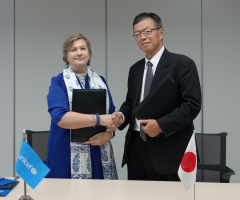
UNICEF
“The Project for Multiple Humanitarian Assistance for Displaced Persons from
Myanmar in Southeastern Part”
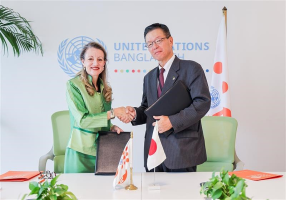
UNFPA
“The Project for Protection and Health Promotion for Women and Adolescents of
Displaced Persons from Myanmar and Host Communities in the Southeastern Part”
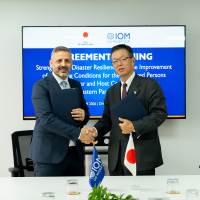
IOM
“The Project for Strengthening Disaster Resilience and the Livelihood Improvement
for the Displaced Persons from Myanmar and Host Communities in the Southeastern
Part”
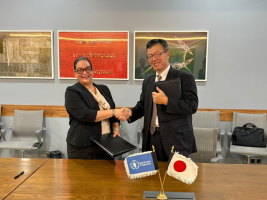
WFP
“The Project for the Improvement of Access to Food and Nutritional Supplements for
Displaced Persons from Myanmar and Strengthening Disaster Resilience for Smallholder Farmers of Host Communities in the Southeastern Part”
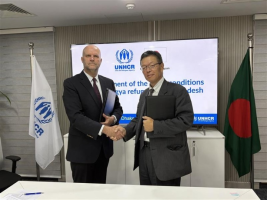
UNHCR
“The Project for the Improvement of the Living Conditions for Displaced Persons
from Myanmar in the Southeastern Part”
UNFPA
“The Project for Protection and Health Promotion for Women and Adolescents of
Displaced Persons from Myanmar and Host Communities in the Southeastern Part”
IOM
“The Project for Strengthening Disaster Resilience and the Livelihood Improvement
for the Displaced Persons from Myanmar and Host Communities in the Southeastern
Part”
WFP
“The Project for the Improvement of Access to Food and Nutritional Supplements for
Displaced Persons from Myanmar and Strengthening Disaster Resilience for Smallholder Farmers of Host Communities in the Southeastern Part”
UNHCR
“The Project for the Improvement of the Living Conditions for Displaced Persons
from Myanmar in the Southeastern Part”
Dhaka, March 10, 2026— The Government of Japan has reaffirmed its steadfast commitment to Rohingya refugees and host communities in Bangladesh by signing and exchanging notes for five new grant assistance projects with UN agencies this month, totaling JPY 2.57 billion, or USD 16.5 million. These contributions were formalized in Dhaka between 2 and 5 March 2026 through partnerships with UNICEF, UNFPA, IOM, WFP, and UNHCR.
The new package comes at a critical time for the Rohingya response. Nearly 1.2 million Rohingya refugees remain in Bangladesh under increasingly difficult conditions, while humanitarian funding is under severe pressure and needs continue to rise for both refugees and Bangladeshi host communities. Japan’s latest support is designed to help sustain life-saving services, strengthen resilience, and uphold human dignity in one of the world’s largest and most protracted humanitarian crises.
Through these five projects, Japan will support a broad range of urgent priorities in Cox’s Bazar and Bhasan Char, including food assistance, nutrition, health services, sexual and reproductive health, protection of women and girls, education, water and sanitation, shelter materials, clean cooking solutions, healthcare, livelihoods, and climate resilience support for host community farmers. The assistance will benefit Rohingya refugees as well as vulnerable Bangladeshi communities hosting them. Under the package, Japan is providing:
- USD 1.4 million to UNICEF to support children’s health, education, WASH, and nutrition in Cox’s Bazar and Bhasan Char;
- USD 3.2 million to UNFPA to sustain life-saving sexual and reproductive health services, GBV response, and adolescent support;
- USD 2.6 million to IOM to improve living conditions through shelter, health, LPG distribution, site management, and livelihoods support;
- USD 6.7 million to WFP to provide food assistance and nutrition services for refugees, while strengthening the resilience of host community farmers;
- USD 2.6 million to UNHCR to support shelter repair materials, primary healthcare, and clean cooking sets for Rohingya refugees.
H.E. Mr. SAIDA Shinichi, Ambassador of Japan to Bangladesh, said:
“Japan remains firmly committed to supporting Rohingya refugees and the Bangladeshi host communities that have shown remarkable generosity in the face of a protracted humanitarian crisis. Through these five new partnerships with UN agencies, Japan is delivering timely and practical support to protect lives, dignity, and resilience. We hope this assistance will help sustain essential services at a time of growing humanitarian need and shrinking global resources.”
Since the beginning of the Rohingya emergency in August 2017, Japan has been one of the most consistent supporters of the humanitarian response in Bangladesh, contributing over USD 250 million, and according to some agency tallies over USD 260 million, to UN agencies and NGOs responding to the crisis. This latest package underscores Japan’s determination to remain a reliable partner for Bangladesh and for all those affected by the Rohingya crisis.
Japan also believes that supporting the Rohingya response is not only a humanitarian imperative, but also essential for maintaining stability, social cohesion, and resilience in Bangladesh’s refugee-hosting areas, and for contributing to broader regional stability in Asia. In this spirit, Japan will continue to work closely with the Government of Bangladesh, UN agencies, and the international community toward a sustainable solution to the Rohingya crisis.